Andrew Ma
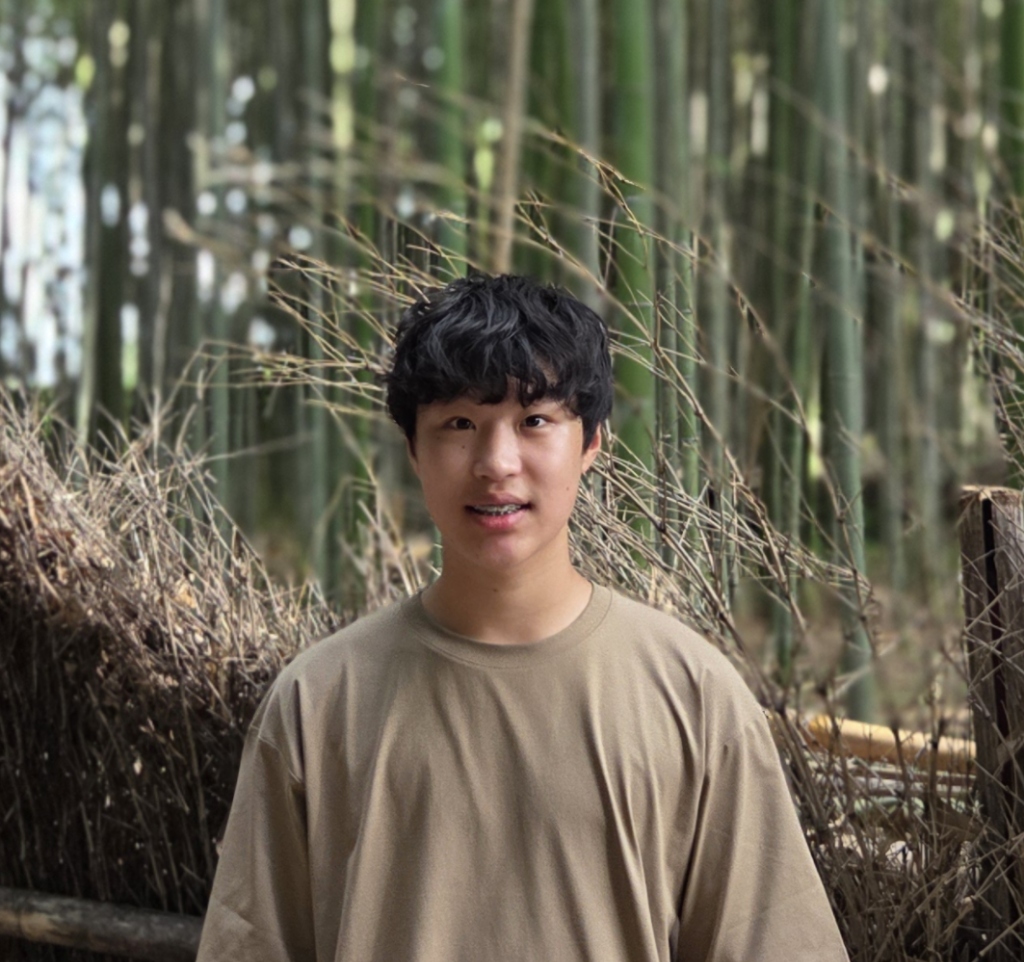
Andrew Ma
About Me
I am a student researcher at Tesla STEM High School and a Machine Learning Research Intern at the University of Washington (UW). My research centers on developing principled, resource-efficient deep learning architectures for scientific discovery and high-impact real-world systems.
In addition to my research, I serve as a Web Developer for the Competitive Programming Initiative (CPI), an Ambassador for the USAIIAO (USA International Artificial Intelligence Olympiad), and a certified Sno-King Ice Hockey Referee.
I also write about machine learning, model efficiency, and engineering systems on daily.dev.
Research Interests
I focus on designing and deploying principled machine learning models—spanning Vision Transformers (ViTs), Graph Neural Networks (GNNs), long-sequence temporal attention, efficient token sparsification, and dense context compression to address pressing challenges in climate resilience & precision agriculture, watershed & ecological forecasting, remote sensing & satellite observation, and clinical healthcare monitoring.
news
| Nov 01, 2026 | Our two physics research papers were accepted to the Spring 2026 APS Northwest Section Meeting (APS PNW) (presented May 21, 2026): PSTL: Investigating Particle Scattering in Triply Periodic Minimal Surface Lattices (Session N01.07) and Quantifying Non-Gaussian Scattering Tails in Micro-Heterogeneous Phantoms for Proton Therapy Applications (Session P01.01). |
|---|---|
| Oct 31, 2026 | Excited to announce that our expanded paper “CalAD: A Calibrated MRI Baseline for Alzheimer’s Detection on OASIS-3” (co-authored with Khush Mehta) has been accepted as a poster to SPIE Medical Imaging 2027! |
| Oct 27, 2026 | Our paper “Beyond Site Decodability: When Does a Scanner Shortcut Actually Inflate Diagnostic Performance?” (solo author) concluded review for the ML4H 2026 Findings track. While the paper was not accepted in the final decision, it received encouraging reviews—scores of 4 (Marginal Accept), 3 (Marginal Reject), 4 (Marginal Accept), 4 (Marginal Accept), and 3 (Marginal Reject)—with reviewers highlighting the importance of the Shortcut Gap metric. Our extensive rebuttal and new analyses across corrected IXI ($N=563$) and ABIDE I cohorts successfully addressed key methodological feedback, demonstrating that the gap serves as a sensitive screening diagnostic that scales from 0.074 to 0.240 under induced site-label correlation. We thank the reviewers and program chairs on OpenReview as we prepare the extended manuscript for future submission! |
selected publications
-
- Attention-Augmented Temporal Fusion Transformer for Short-Horizon Hypoglycemia Prediction in Type 1 DiabetesEndocrine Practice, 2026Presented and published as first author at AACE / Endocrine Practice. Preprint on Research Square: https://www.researchsquare.com/article/rs-10856000/v1.
- MLHMI / IEEECropViT: Climate-Aware Vision Transformer Model for Crop Yield PredictionIn 2026 7th International Conference on Machine Learning and Human-Computer Interaction (MLHMI 2026), 2026Accepted February 8, 2026. Published in IEEE Xplore (Doc ID: 11644961). First author oral presentation at JpGU-AGU Joint Meeting 2026 (Sun. May 24, 2026).
- CalAD: A Calibrated MRI Baseline for Alzheimer’s Detection on OASIS-32027Accepted as Poster at SPIE Medical Imaging 2027. First author (Ma, Andrew), second author (Mehta, Khush).
- Under ReviewSpatial Deep Learning for Environmental DNA (eDNA) Localization and Biodiversity Mapping2026Preprint / Under review. In collaboration with Pedro Brandão Dias Ferreira Pinto (University of Washington).